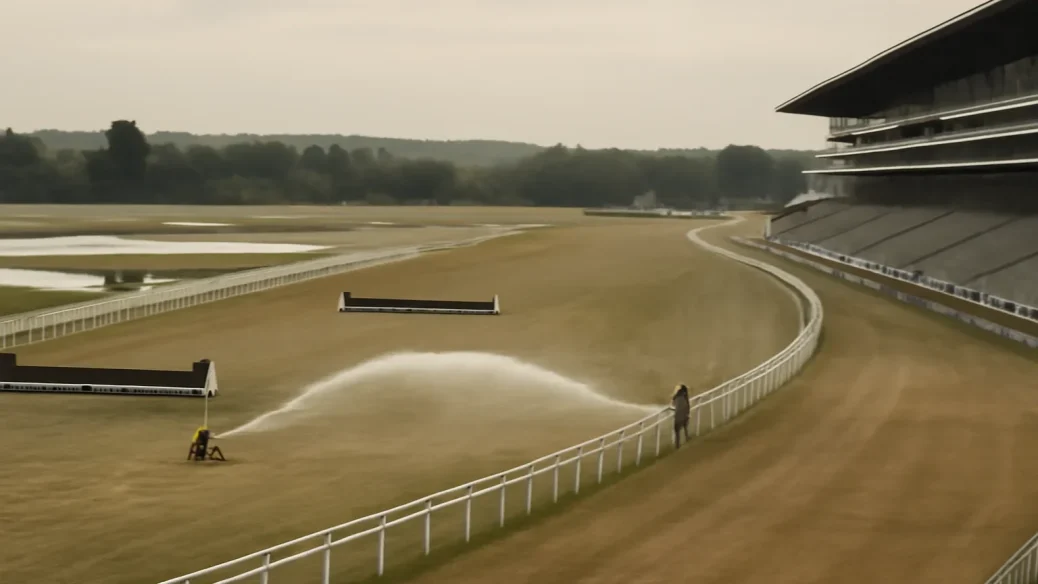
Racecourses contending with dry spell as National Hunt preparations begin
With unrelenting warm weather and little meaningful rain in sight, racecourses and trainers preparing for the National Hunt season are having to adapt their usual pre-season routines. The prolonged dry conditions are already affecting gallops and turf at venues that stage jumps racing, prompting extra work from ground teams and careful planning from trainers managing horses that prefer softer ground.
Ascot starts watering as autumn fixtures approach
Ascot, which switches to its jumps programme shortly after British Champions Day, has begun watering its course in advance of the first scheduled National Hunt meeting at the end of October. Clerk of the course Chris Stickels said the operation is already under way and will continue through the autumn.
Stickels noted that the racecourse’s reservoirs contain water, but that abstraction is constrained by the Environment Agency, which limits how much can be taken. He indicated that the situation is manageable but that rain would be welcome to relieve pressure on resources and the track.
Training yards weighing how far to bring horses forward
Trainers are also having to consider their plans carefully. Several leading yards have brought back many of their National Hunt horses for the new campaign, but the drier-than-normal turf is influencing decisions about the timing and intensity of work.
The recent Flat season has highlighted the condition of courses that also stage jumps; some are looking notably dry compared with what is customary for this time of year. That factor is prompting trainers to think twice about running or schooling horses that perform best on cut ground.
Cheltenham completes drainage work and prepares to water
Cheltenham has completed remedial drainage work to the home straight following the cancellations at the end of last season and is moving into its season-preparation phase. Clerk of the course Jon Pullin confirmed the racecourse will use its reservoir to begin watering areas where drainage improvements were carried out, and will prepare the full course for the autumn fixtures.
Pullin said the cross-country course is not normally used until November, and while continued watering of the Old Course in advance of October and November meetings could present a challenge for the cross-country layout, it is too early to assess any definite impact.
Practical steps and contingency thinking
- Racecourse teams are prioritising watering programmes where reservoirs and abstraction licences allow.
- Trainers are moderating schooling schedules on gallops that are showing the effects of the dry spell and reassessing how far to bring horses forward this autumn.
- Officials at courses with drainage upgrades are keeping a close watch on recovery and turf preparation ahead of multi-day meetings.
Fixtures and the weather outlook
As seasonal meetings approach, organisers are balancing course preservation with the need to present a fair and safe surface for racing. The prospect of further warm weather has already prompted one meeting to adjust its start time, and racecourses will continue to monitor forecasts and turf condition reports closely in the weeks ahead.
Practical implications for racegoers:while racing continues on the Flat without interruption, those following the jumps season should expect some additional pre-season attention from racecourses and trainers as they manage the impact of the dry spell on gallops and jumping tracks.